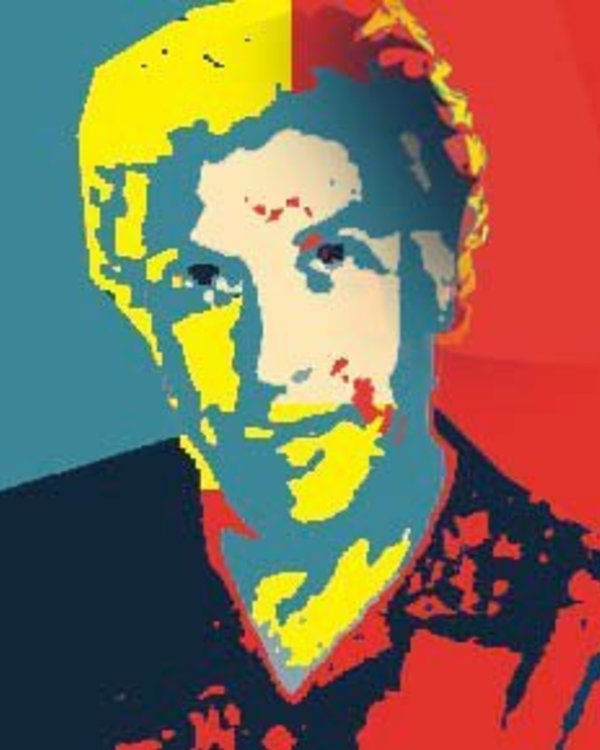
Benedict Giamo

Associate Professor
Ph.D., Emory University
B.A., Baldwin-Wallace College
1039 Flanner Hall
University of Notre Dame
Notre Dame, IN 46556
Phone: (574) 631-7142
Fax: (574) 631-4399
bgiamo@nd.edu
Profile
Benedict Giamo is the author of On the Bowery, Beyond Homelessness, The Homeless of Ironweed, and Kerouac, the Word and the Way. His most recent book–Homeless Come Home: An Advocate, the Riverbank, and Murder in Topeka, Kansas–is a nonfiction account that blends investigative journalism, social analysis, and true crime. The book chronicles the kidnapping and murder of an advocate for the homeless, including the trials of three homeless co-defendants charged with the crimes. Giamo teaches courses in the areas of poverty and homelessness, literary and cultural studies, fieldwork, and social change.
Courses
-
AMST 30112: Witnessing the Sixties
-
AMST 30113: Fieldwork and American Documentary
-
AMST 30110: Confronting Homelessness in the United States
-
AMST 30148: Culture & Society in the Great Depression
-
AMST 43123: Kerouac, the Beats, and Dylan
Books
-
Homeless Come Home: An Advocate, the Riverbank, and Murder in Topeka, Kansas, University of Notre Dame Press (2011)
-
Notes from the Bowery, Xlibris (2009)
-
Kerouac, the Word and the Way: Prose Artist as Spiritual Quester, Southern Illinois University Press (2000)
-
The Homeless o/Ironweed (Blossoms on the Crag), University of Iowa Press (1997)
-
Beyond Homelessness: Frames of Reference (with Jeffrey Grunberg), University of Iowa Press, (1992)
-
On the Bowery: Confronting Homelessness in American Society, University of Iowa Press, (1989)
Recent Articles and Essays
-
“Jack of Jacks: Alternative History” [Kerouac & American Football], Sport Literate, Vol. 7, Issue 1 ( 2011)
-
“The Means of Representation: Kenneth Burke and American Marxism,” Kenneth Burke Journal, Vol. 5, No. 2 (2009)
-
“Played Out,” a personal essay on football, Sport Literate, Vol. 6, No. 1 (2008)
-
“An American Original: Kenneth Burke,” Harvard Review 27 (2004)
-
“The Myth of the Vanquished: The Hiroshima Peace Memorial Museum,” American Quarterly 55 (2003)
