The Major
What does it mean to be an American?
This is not an easy question to answer and the stakes are high. In American Studies, students and faculty draw on a wide variety of methods to explore the United States and the complex, sometimes contradictory, definition of “Americanness.”
As a nation of natives and immigrants, the United States has always encompassed diverse racial and ethnic groups. Throughout rapidly changing historical and global contexts, Americans have forged various cultures expressing the diversity of American experience. American Studies examines those cultures, societies, and politics from multiple perspectives.
Each member of our renowned faculty takes a unique approach to this topic, but we share a dogged determination to understand what it means to be an American.
Major in American Studies. Do Anything.
American Studies has shaped me into a citizen who is constantly contemplating the structure of human culture and the social dynamics it creates. It encourages scholars not to view a piece of history as isolated in time but rather as a moment that exists in and is influenced by other moments in time. The AMST lens has influenced how I view not only what is going on around me contemporarily but also my role in impacting the contemporary.
- Ella Cain, 2024
American Studies is the ideal major for students who are interested in the world around them but who don’t want to limit themselves to just one method or perspective.
Take courses on anything from “The American West” and “American Capitalism” to “Race and Popular Culture” and “Catholics in America” and much, much more. After all, why should you limit yourself?
American Studies is a student-centered major that fosters a vibrant academic community. Our graduates find success in some of the most interesting career fields, graduate programs, and service programs.
Ask our current majors and they will tell you that they love our intellectually provocative curriculum that tackles real-world issues, our brilliant but approachable faculty, and the tightly-knit relationships formed between students and professors in this remarkable department.
Student Opportunities
Development doesn't stop in the classroom. We help create valuable, memorable, and fulfilling experiences that our students take full advantage of.
Internships, fellowships and grants, study abroad, and service programs have taken our students around the world.
The newsrooms of The New York Times and ESPN, rural Appalachia and inner-city Memphis, and the former slave lodges of South Africa are just some of the places our majors have chosen to go to enrich their lives as well as their education.
Students also have the opportunity to publish their research, show off their photography, and create media in our undergraduate journal, Americana. Check out some of the students' past work by visiting Americana's website.
Questions?
Contact Director of Undergraduate Studies Peter Cajka or visit us on the third floor of O'Shaughnessy Hall.
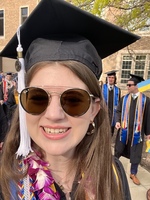
"A degree in American Studies is a degree in the world around you. Every single day I use my AMST knowledge and skills, whether that's in my master's program, at a Cubs game, or watching a stand-up special on Netflix. Come for the cool classes, stay for the community (and the LaCroix!)."
— Julianne Downing, ND '22
MSc Higher Ed. Oxford University, MA Social Sciences UChicago